Aug 18, 2026Pet Product Manufacturing
Should Pet Brands Develop Packaging Before or After the Product Sample?
When should a pet brand develop packaging? Learn how packaging timing affects MOQ, retail readiness, Amazon fulfillment, EU requirements and total product cost.
Should Pet Brands Develop Packaging Before or After the Product Sample?
I often see packaging discussed surprisingly late in pet product development.
We may spend several weeks discussing a harness: fabric, Pantone colour, buckle, webbing, logo and sizing. The sample is finally approved, and then comes the question:
“What packaging can we use?”
Sometimes that timing works.
Sometimes it creates an entirely new round of problems.
The paper card does not fit the product. The printed bag has another MOQ. The retailer needs a barcode in a specific position. An Amazon seller needs different labels. Or the packaging looks attractive in a mock-up but becomes unnecessarily large once the actual harness is inside.
For most private label pet products, packaging should be planned during product development but finalized only after the product dimensions and construction are confirmed. Brands should define the sales channel, packaging type, information requirements and target cost early, then use the approved product sample to confirm the final size and artwork before mass production.
This approach avoids designing packaging too early—and avoids discovering packaging problems too late.
1. Why Should Packaging Start Before the Product Is Finished?
Packaging is often treated as the last cosmetic step.
For B2B product development, it is much more than that.
Packaging affects:
- Product presentation
- Retail merchandising
- Shipping volume
- Barcode placement
- Product information
- MOQ
- Unit cost
- Fulfillment
- Market requirements
That means packaging decisions can influence the commercial feasibility of the product itself.
Packaging Has Its Own MOQ
A brand may negotiate a manageable MOQ for its first harness order and then discover that the packaging supplier has a completely different requirement.
Consider a hypothetical launch:
Item | Initial Requirement | Possible Packaging Issue |
|---|---|---|
Harness | 300 pcs | 5 sizes need clear identification |
Collar | 200 pcs | Several lengths/sizes |
Leash | 200 pcs | May share packaging format |
Walking bag | 100 pcs | Requires larger packaging |
Printed box | Custom | May have separate MOQ |
The brand thought it was developing four products.
In reality, it may also be developing several packaging SKUs.
This is why I prefer to ask about packaging early.
Not necessarily to print it early—but to understand the implications.
Packaging Changes the Real Product Cost
Suppose two packaging options are available:
Option A: Printed paper card
Option B: Large rigid retail box
The box may look more premium.
But it can also increase:
- Packaging cost
- Carton volume
- Freight cost
- Warehouse space
- Fulfillment cost
If the customer sells mainly through Amazon, a beautiful oversized box may not create enough additional value to justify those costs.
If the product is going into a premium physical retailer, the calculation may be different.
Packaging should follow the sales channel and positioning, not simply the designer's preference.
2. Should Amazon, Retail and DTC Brands Use the Same Packaging?
Usually, not automatically.
A product can be identical while the packaging requirements are completely different.
Physical Retail Needs Shelf Communication
Imagine a customer standing in a pet store.
They need to understand quickly:
What is this?
What size is it?
What colour?
What is the main benefit?
Can I see or touch the product?
Retail packaging therefore needs to work as a small salesperson.
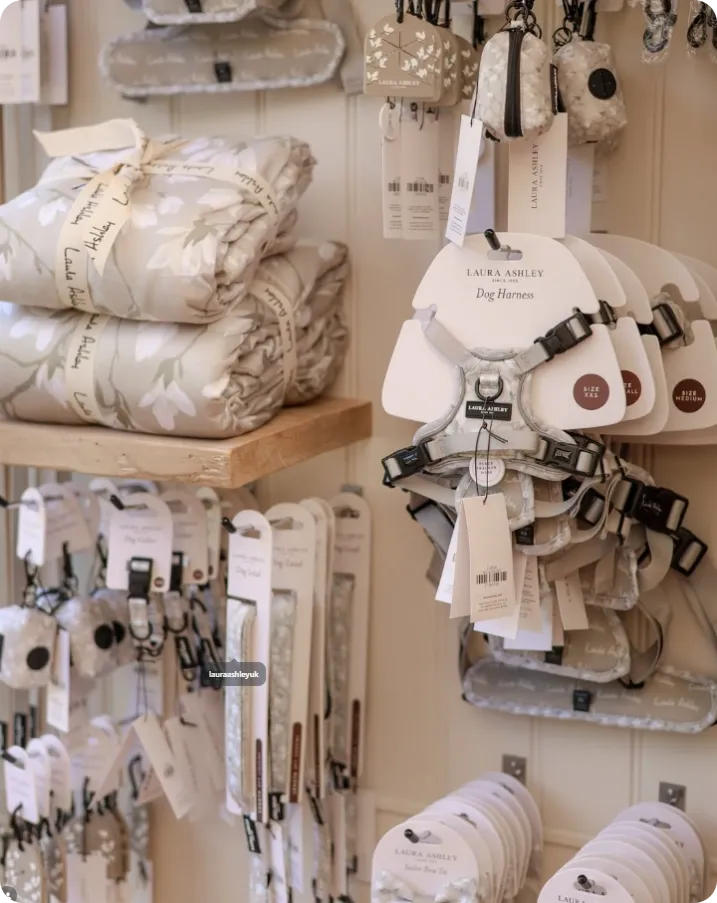
For a harness, a paper hanger or belly band may allow customers to feel the material while still presenting:
- Brand
- Size
- Key product information
- Barcode
A completely enclosed box may hide the product.
That could be useful for some categories and counterproductive for others.
Amazon Packaging Has Different Priorities
An Amazon customer has already seen the photography, description and reviews before receiving the product.
The packaging therefore has a different job.
It may need to prioritize:
- Protection
- Correct SKU identification
- Fulfillment labels
- Efficient shipping volume
- Customer experience
An Amazon seller should think carefully before paying for packaging features that look impressive on a physical shelf but add little value in a fulfillment center.
DTC Gives Brands More Freedom
Direct-to-consumer brands can use packaging to strengthen the unboxing experience.
But even here, there is a balance.
A customer may appreciate a beautiful package.
They may not appreciate receiving a small collar inside a box four times larger than necessary.
This is becoming increasingly relevant in Europe.
3. What Do the New EU Packaging Rules Mean for Pet Product Brands?
Packaging is no longer only a branding discussion.
The EU's new Packaging and Packaging Waste Regulation began applying on August 12, 2026. The framework is designed to reduce packaging waste and move packaging toward greater recyclability and circularity.
Reuters reports that packaging accounts for around 40% of plastic consumption in Europe, while the new rules include measures around recyclability, unnecessary packaging and empty space.
For a pet accessories brand, the practical lesson is not:
“Never use plastic.”
It is:
Do not design packaging without considering where the product will be sold.
Avoid Packaging That Is Larger Than Necessary
A dog collar does not need a huge box simply to create a premium appearance.
Brands should consider whether packaging volume is proportionate to the product.
This can also reduce freight and storage cost.
Think About Material Simplicity
Packaging that combines many materials may look sophisticated but can be harder to manage from a recyclability perspective.
Depending on the product, simpler solutions may include:
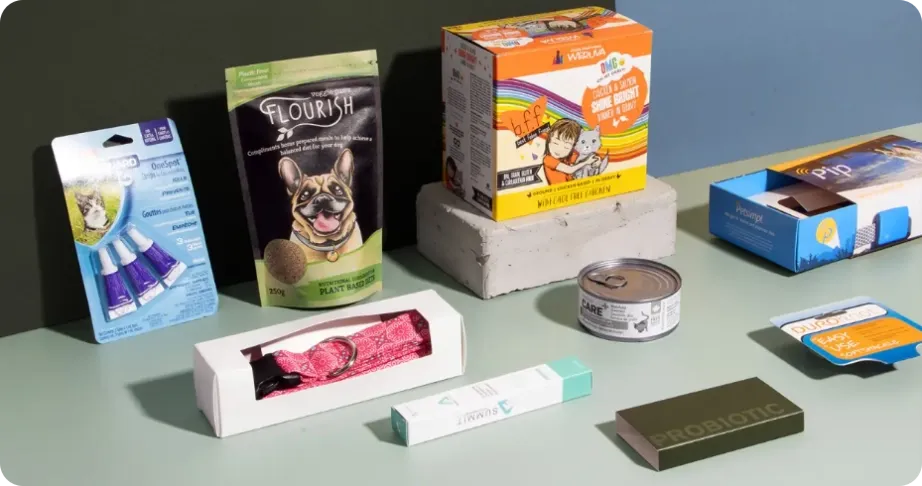
- Paper cards
- Paper belly bands
- Recyclable paper boxes
- Reduced-material packaging
The correct solution depends on the market, product and applicable requirements.
Do Not Make Sustainability Claims Casually
Another common mistake is putting terms such as:
“Eco-friendly”
“Sustainable”
“100% green”
on packaging without clearly supporting the claim.
For B2B brands, sustainability language should be based on actual materials and evidence rather than used simply as a marketing decoration.
4. When Should the Final Packaging Be Approved?
This is where timing matters.
I would separate packaging development into four stages.
Stage 1: Product Concept
Decide:
- Target market
- Sales channel
- Retail positioning
- General packaging direction
Do not finalize dimensions yet.
Stage 2: Product Sampling
Once the product structure becomes clear, evaluate:
- Folded dimensions
- Hanging method
- Packaging shape
- Product visibility
- Approximate packaging size
This is also the right stage to ask packaging suppliers about MOQ and pricing.
Stage 3: Final Sample Approval
Now the product dimensions should be stable.
Use the approved product to confirm:
- Packaging dimensions
- Artwork
- Size information
- Barcode area
- Logo
- Required product information
This is the best time to make a packaging sample if needed.
Stage 4: Production
Only after product and packaging specifications are approved should bulk packaging be ordered.
The process can therefore be summarized simply:
Product Stage | Packaging Action |
|---|---|
Concept | Define direction |
First sample | Test packaging idea |
Final sample | Confirm size + artwork |
Pre-production | Approve packaging sample |
Mass production | Produce final packaging |
The mistake is not designing packaging early.
The mistake is printing it early.
How Can Brands Keep Packaging MOQ Under Control?
This is particularly important for new private label brands.
Suppose you have five harness sizes.
Creating five completely different boxes may create unnecessary complexity.
Instead, consider whether the same packaging structure can be shared.
For example:
One paper card design + size sticker.
Or:
One bag format + different barcode labels.
The exact solution depends on the product, but the principle is useful:
Standardize what customers do not need to be different. Customize what strengthens the brand or communicates essential information.
The same strategy works across collections.
A harness, collar and leash might share:
- Typography
- Colour system
- Logo position
- Packaging material
- Graphic language
without requiring identical packaging dimensions.
That creates brand consistency without creating unnecessary production complexity.
Packaging Should Be Part of the OEM Conversation
When brands contact an OEM supplier, they often ask first about:
Product price.
MOQ.
Sample cost.
Lead time.
I would add another question:
What packaging options make sense at this order quantity?
That question can reveal problems early.
For example, the supplier may suggest that a fully printed box is inefficient for the initial quantity, while a custom paper card can achieve a professional retail presentation with less inventory risk.
Later, once the product becomes established, the packaging can evolve.
This creates a sensible development path:
Test launch → simple branded packaging → proven sales → more customized packaging
The first order does not need to solve every future branding requirement.
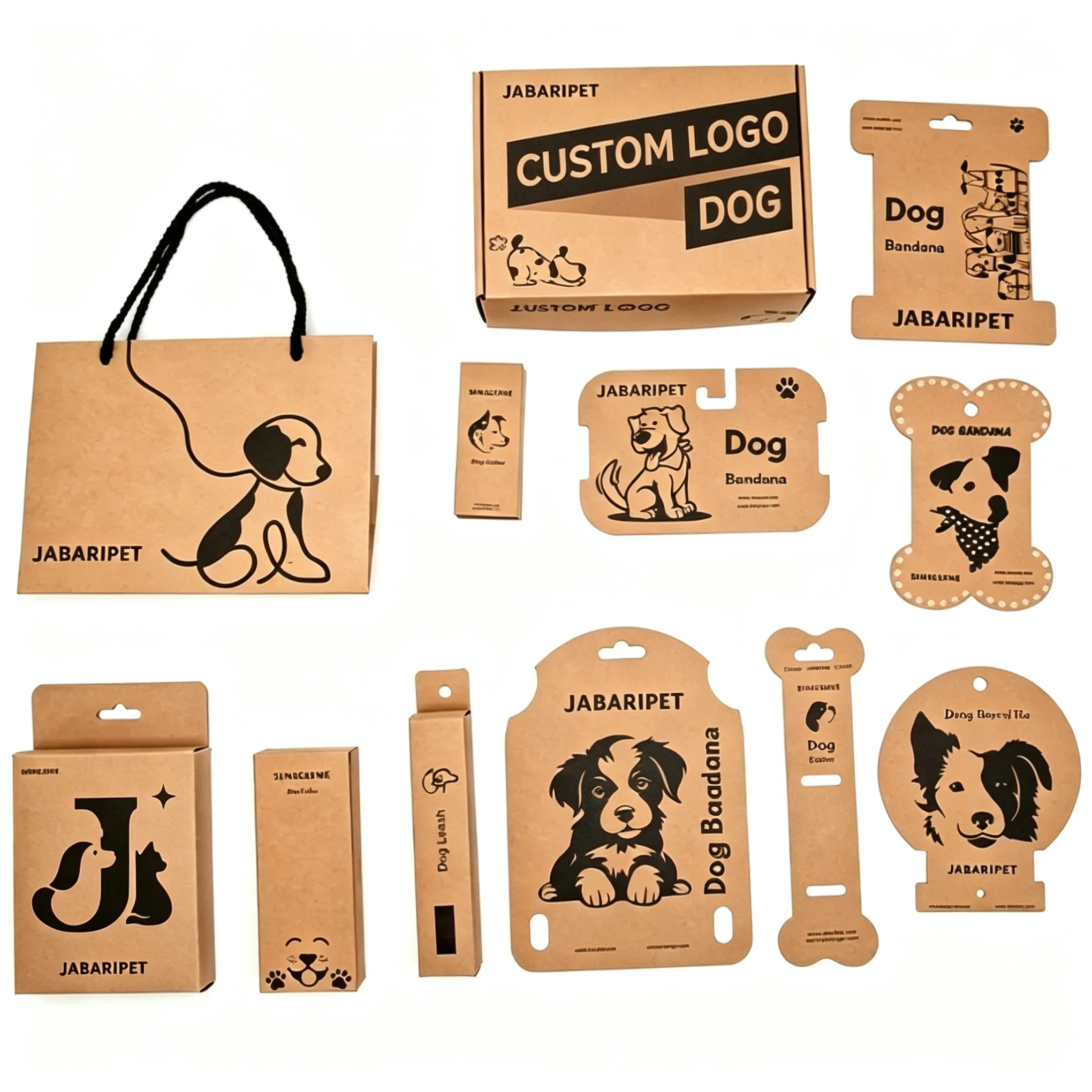
How JABARI PET Approaches Private Label Packaging
At JABARI PET, we work with pet brands, retailers and Amazon sellers developing harnesses, collars, leashes, apparel, walking bags and other pet accessories.
Packaging is usually discussed alongside the product rather than treated as an unrelated purchase at the end.
Depending on the project, options can include:
- Paper cards
- Hang tags
- Branded bags
- Belly bands
- Stickers
- Woven labels
- Custom boxes
- Barcode and SKU labeling
The best option depends on the order quantity, product dimensions, sales channel and target market.
For a new brand testing a collection, simpler packaging can sometimes provide a more flexible starting point.
For an established retail product, a more customized packaging structure may make commercial sense.
The goal is not to use the cheapest packaging.
Nor is it to use the most elaborate packaging.
It is to develop packaging that fits the product, brand, sales channel and supply chain at the same time.
Final Answer: Plan Packaging Early, Print It Late
So, should pet brands develop packaging before or after the product sample?
Start thinking about it before the sample is finished.
But do not finalize the packaging until the product itself is stable.
This avoids two opposite mistakes.
If packaging starts too late, brands may discover unexpected MOQ, retail or fulfillment problems.
If packaging is printed too early, every product adjustment can make the artwork or dimensions obsolete.
For private label pet brands, the best sequence is:
Market → Product → Packaging Direction → Sample → Final Packaging → Production
And as European packaging requirements continue to evolve, this sequence becomes even more important.
A good private label product should not reach the end of sampling and suddenly ask:
“Now, what do we put it in?”
Packaging is part of product development.
The earlier brands understand that, the fewer expensive surprises they are likely to encounter before launch.
Sources & Further Reading
The EU's updated packaging rules began applying on August 12, 2026, with measures addressing recyclability, packaging reduction and unnecessary empty space. Current European private-label analysis also highlights the importance of developing packaging and product positioning that work across both e-commerce and physical retail.
For broader U.S. market context, American Pet Products Association reports that U.S. pet industry expenditure reached $158 billion in 2025 and projects $165 billion in 2026, reinforcing why packaging decisions increasingly need to support brands operating across multiple international sales channels.